Nuss Procedure - Pectus Excavatum
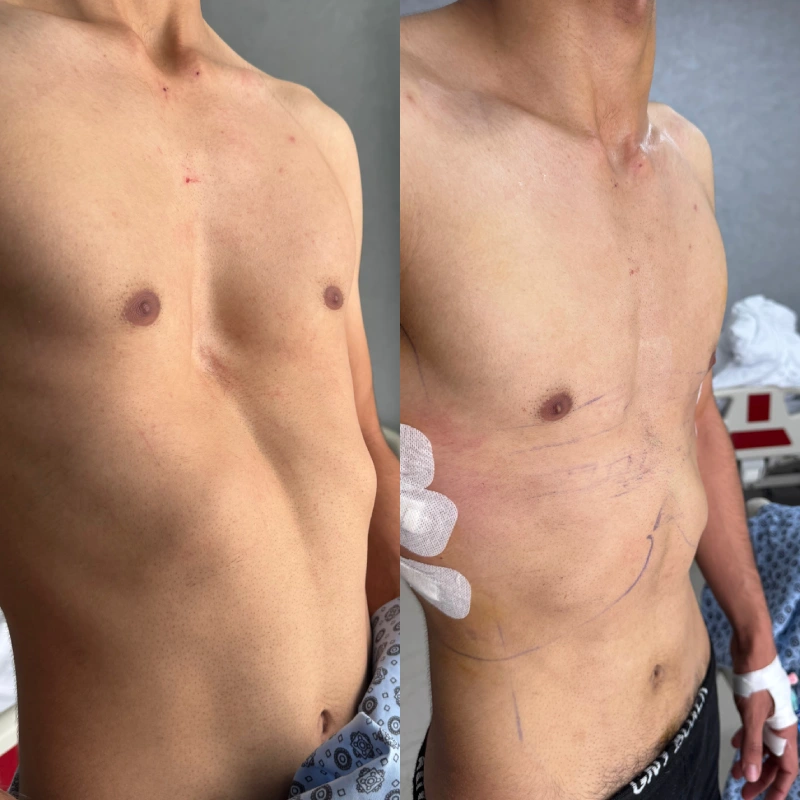
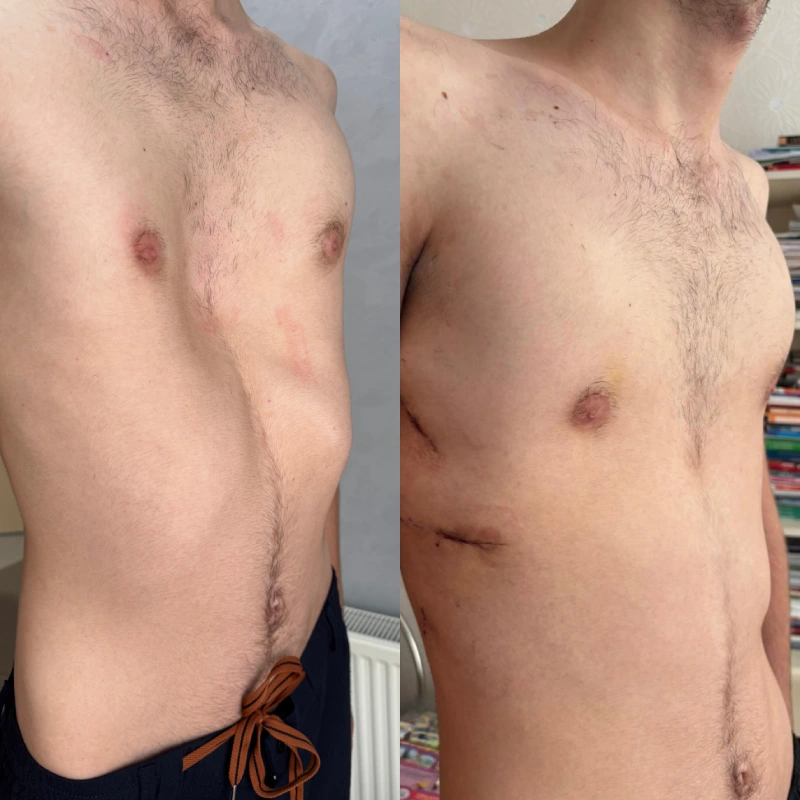
The Nuss Procedure is a minimally invasive surgical technique used to treat Pectus Excavatum, a condition where the breastbone (sternum) is sunken into the chest. Developed by Dr. Donald Nuss in the 1980s, it has become the “gold standard” for correcting this deformity in children and adolescents, and increasingly in adults.
How the Procedure Works
Unlike the older “Ravitch Procedure,” which requires removing cartilage and breaking the sternum, the Nuss procedure is “reconstructive” rather than “reductive.”
Incisions: Small incisions are made on each side of the chest.
The Bar: A customized, curved metal bar (usually made of stainless steel or titanium) is inserted through the incisions and guided behind the sternum.
The Flip: Once in place, the surgeon rotates (flips) the bar. This applies internal pressure to push the sternum outward into a normal position.
Stabilization: The bar is secured to the ribs with stabilizers and sutures to prevent it from shifting.
Recovery and Results
The recovery process is focused primarily on pain management and allowing the chest wall to adapt to its new shape.
Hospital Stay: Typically 3 to 5 days.
Pain Management: Often involves an epidural or regional nerve blocks (like Cryoanalgesia, which freezes the nerves temporarily to reduce post-op pain) during the initial days.
Duration: The bar typically remains in the chest for 2 to 3 years. This allows the chest wall to permanently remodel into the corrected shape.
Removal: A second, much simpler outpatient surgery is performed to slide the bar out once the correction is permanent.